Study, reflect upon, and practise the ultimate Dhamma without heedlessness. »
Étudiez, méditez et pratiquez le Dhamma suprême ultime sans négligence. »
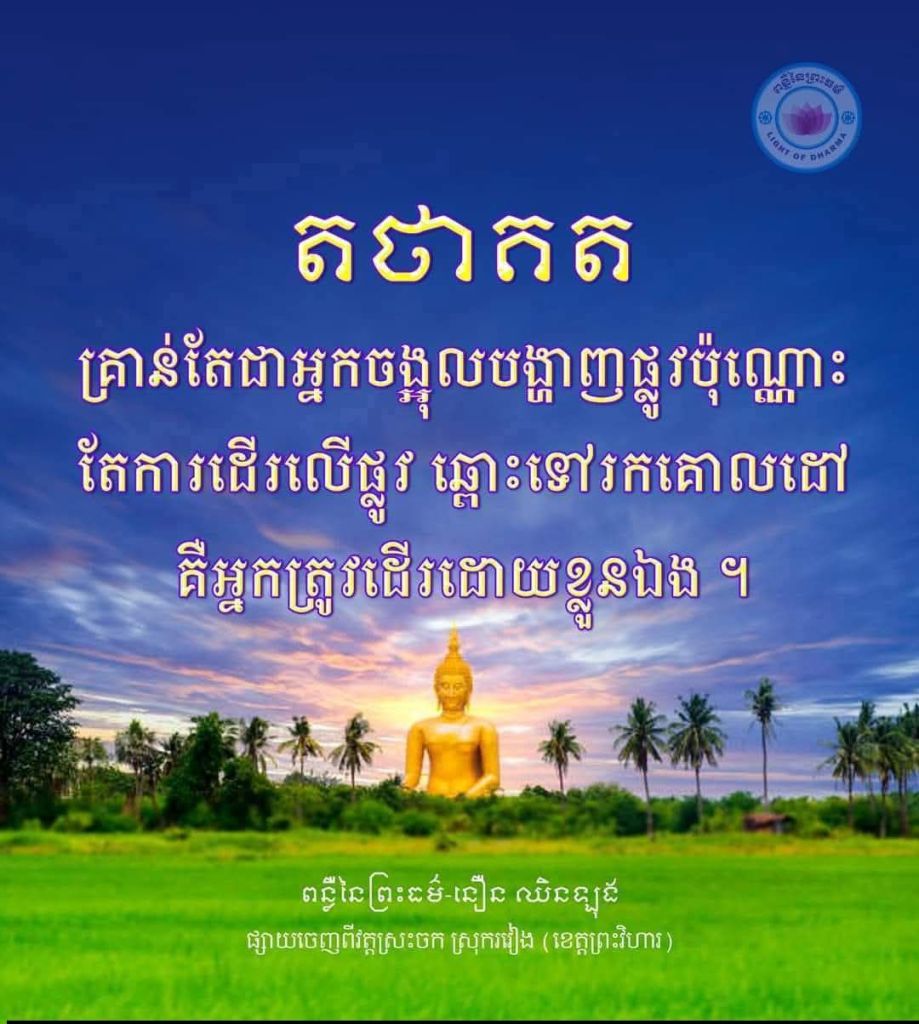
សិក្សា ពិចារណា បដិបត្តិ បរមត្ថធម៌ដោយមិនប្រមាទ
Study, reflect upon, and practise the ultimate Dhamma without heedlessness. »
Étudiez, méditez et pratiquez le Dhamma suprême ultime sans négligence. »
ព្រះពុទ្ធព្រះធម៌ព្រះសង្ឃ BUDDHA DHARMA SANGHA BOUDDHA DHAMMA SANGHA



ខ្មែរ (ត្រូវបានបកប្រែ)
« សិក្សាពិចារណាបដិបត្តិបរមត្ថធម៌ដោយមិនប្រមាទ »
English Translation
« Study, reflect upon, and practise the ultimate Dhamma without heedlessness. »
Or more literally:
« Study, contemplate, and practise the supreme ultimate Dhamma with diligence — free from negligence. »
Word-by-word breakdown:
- សិក្សា (seksa) — to study, to learn
- ពិចារណា (pichéaréaná) — to reflect, to contemplate, to consider
- បដិបត្តិ (batépat) — to practise, to apply in conduct
- បរមត្ថធម៌ (baramattha thoa) — the ultimate Dhamma / supreme truth (from Pāli: paramattha dhamma)
- ដោយមិនប្រមាទ (daoy men praméat) — without heedlessness, with diligence, without negligence
Traduction française
« Étudiez, méditez et pratiquez le Dhamma suprême ultime sans négligence. »
Ou de façon plus littérale :
« Étudiez, contemplez et mettez en pratique le Dhamma de la vérité ultime avec diligence — sans jamais vous laisser aller à la négligence. »
Analyse mot à mot :
- សិក្សា — étudier, apprendre
- ពិចារណា — réfléchir, contempler, examiner
- បដិបត្តិ — pratiquer, appliquer dans la conduite
- បរមត្ថធម៌ — le Dhamma ultime / la vérité suprême (du pāli : paramattha dhamma)
- ដោយមិនប្រមាទ — sans négligence, avec ardeur, sans relâchement
📝 Note contextuelle / Contextual Note
This phrase is deeply rooted in Theravāda Buddhist tradition, common in Cambodian monastic and scholarly culture. The term បរមត្ថធម៌ (paramattha dhamma) refers to ultimate reality as taught in the Abhidhamma — the highest level of Buddhist philosophical analysis, distinguishing ultimate truths (paramattha) from conventional truths (sammuti). The exhortation to do so « without heedlessness » echoes the Buddha’s very last words: « appamādena sampādetha » — « strive with diligence. »

បើសិនជាឲ្យផ្លែស្វាយមួយសិក្សាពិចារណារកហេតុនិងបច្ច័យមិនប្រមាទតើឃើញអ្វីខ្លះតាមរូបមន្តព្រះសាស្ដា
តើឃើញបរមត្ថធម៌បដិសន្ធិហើយឬនៅ?តាមធម្មតាដែលយើងស្គាល់ជាទូទៅការចាប់កំណើតដែលយើងដឹងសព្វដងគឺពេលដែលកូនក្មេងចាប់កំណើត។ហើយនឹងអាយុធំទើបស្លាប់ មរណៈ។ព្រះសាស្ដាលោកមិនបានបញ្ជាក់យ៉ាងក្បោះក្បាយទេ។ទុកឱ្យអ្នកសិក្សាពិចារណាដើម្បីឲ្យមានបញ្ញាដោយខ្លួនឯង។ព្រះអង្គគ្រាន់តែបង្ហាញនូវរូបមន្តដូចជា ធម៌ទាំងឡាយមានហេតុនិងបច្ច័យ។ធម៌ណាកើតជាធម្មតាធម៌នោះរលត់ទៅវិញជាធម្មតា។ បរមត្ថធម៌គឺ ធម្មជាតិជាធាតុដឹងនិងភាពមិនដឹង គឺចិត្ត ១២១ចេតសិក៥២រូប២៨ ដែលកើតរលត់ផ្លាស់ប្ដូរយ៉ាងឆាប់រហ័សដែលជាបច្ច័យឱ្យកើតដំណរគ្នាពុំមានខាងដើមនិងពុំមានទីបញ្ចប់។
មុននឹងផ្លែស្វាយត្រូវគេឃើញទាល់តែមានចក្ខុបសាទ និង ជីវិតិន្ទ្រិយ ដែលជារូបនៅក្នុងទសកៈកលាប(រូបធម៌ខាងក្នុង)មានពន្លឺ ប៉ះផ្ទុប អវិនិព្ភោគរូប៨ ដែលមានវណ្ណរូបដែលមានផស្ស:ចេតសិកជាបច្ច័យ ឲ្យកើតរូបខន្ឋ(រូបដែលឃើញ) សញ្ញាខន្ធ វេទនាខន្ធ សង្ខារក្ខន្ធ វិញ្ញាណក្ខន្ធ ដែលជាបញ្ចខន្ធ ធ្វើកិច្ចទស្សនៈ(គឺជាបដិសន្ធិបរមត្ថធម៌ធ្វើកិច្ចទស្សនៈ)រំលត់យ៉ាងឆាប់រហ័ស បច្ច័យឲ្យកើតបញ្ចខន្ធថ្មីធ្វើការបន្តបន្ទាប់(គឺជាជាតិនិងមរណៈក្នុងមួយខណៈចិត្តដែលកើតរលត់រាប់កោដដងក្នុងមួយផ្ទាត់ដៃដែលសន្មត់ថាសត្វបុគ្គល)នេះគឺជាតិជរាមរណៈក្នុងមួយខណៈចិត្ត ក្នុងភពកាយដែលកើតនិងរលត់ដូចគ្នា។ឯភពខាងក្រៅដែលសត្វបុគ្គលឃើញដ៏កើតរលត់ប្ដូរផ្លាស់យ៉ាងឆាប់រហ័សដូចគ្នា។កើតឃើញនៃសត្វបុគ្គល(ដោយសន្មត់)មិនដូចគ្នាទេព្រោះម្នាក់ៗមានកម្មរៀងខ្លួនដែលជាបច្ច័យឲ្យទស្សកលាបមានធាតុផ្សំមិនដូចគ្នា។តើអាចជឿបានឬទេ?បានឬមិនបានទៅតាមសភាវៈបុគ្គលរៀងខ្លួន តើមានបញ្ញាចក្ខុហើយឬនៅ?បើគ្មានការកើតនិងរលត់ ការវិនាសក៏មិនមាន។បើឃើញផ្លែស្វាយហើយនិយាយភ្លាមច្បាស់ជាមិនដឹងថាផ្លែស្វាយ មិនចេះប្រែប្រួល តែបើចំណាយពេលសិក្សាឲ្យបានយូរបញ្ញាចក្ខុចម្រើនឡើងមិនត្រឹមតែឃើញផ្លែស្វាយវិនាសទ្រុឌទ្រោមស្អុយ អាចឃើញអ្វីៗទៀតជាច្រើន។ការពិចារណារកហេតុនិងបច្ច័យដោយសង្ខេបមានពីរគឺទីមួយគឺហេតុនិងបច្ច័យដែលធ្វើឲ្យមានសេរីរៈយន្ត ទីពីរហេតុនិងបច្ច័យបន្តបន្តគ្នាផ្លែស្វាយនៅខាងក្រៅ។ អរគុណច្រើនក្នុងការស្ដាប់និងអានសូមថ្វាយបង្គំលានិងជម្រាបបន្តលើកក្រោយ។
បញ្ញា៥ខ្វះតែតម្រិះមានច្រើនអាណែកដោយមានតណ្ហាជាបច្ច័យ
តើរកឃើញ ព្រះបិតា ព្រះមាតា អ្នកថែរក្សា ហើយឬនៅ? ព្រះពុទ្ធ ព្រះធម៌ ព្រះសង្ឃ? ព្រះធម៌?
បិដកលេខ ៣០
បទុមបុប្ផសូត្រ ទី១៤
[២៧៤] សម័យមួយ ភិក្ខុមួយរូប នៅក្នុងដងព្រៃមួយ ក្នុងដែនកោសល។ ក៏សម័យនោះឯង ភិក្ខុនោះត្រឡប់មកពីបិណ្ឌបាត (ធ្វើភត្តកិច្ចស្រេច) ក្នុងវេលាក្រោយភត្ត ក៏ចុះកាន់ស្រះបោក្ខរណី ហើយហិតផ្កាឈូក។
[២៧៥] គ្រានោះឯង ទេវតាដែលនៅអាស្រ័យ ក្នុងដងព្រៃនោះ ជាអ្នកអនុគ្រោះ ប្រាថ្នានូវប្រយោជន៍ដល់ភិក្ខុនោះ ចង់ធ្វើភិក្ខុនោះឲ្យសង្វេគ ទើបចូលទៅរកភិក្ខុនោះ លុះចូលទៅដល់ហើយ ក៏ពោលគាថានឹងភិក្ខុនោះថា
លោកហិតផ្កា ដែលកើតក្នុងទឹកនុ៎ះ ដែលគេមិនបានឲ្យ បពិត្រលោកអ្នកនិរទុក្ខ ការហិតនុ៎ះ ជាអង្គមួយនៃការលួច លោកឈ្មោះថាជាអ្នកលួចក្លិន។
[២៧៦] ភិក្ខុនោះ តបថា អាត្មាមិនបាននាំទៅ មិនបានកាច់ទេ គ្រាន់តែហិតផ្កា ដែលកើតក្នុងទឹក អំពីចម្ងាយទេតើ ចុះហេតុដូចម្តេច បានជាអ្នកនិយាយថា អាត្មាលួចក្លិន ចុះបុរសដែលមានអំពើផ្តេសផ្តាស ជីកគាស់ក្រអៅឈូក កាច់ផ្កាឈូកយ៉ាងនេះ ហេតុអ្វី ក៏អ្នកមិនថាឲ្យបុរសនុ៎ះផង [ក្នុងអដ្ឋកថា ថា កាលដែលទេវតាកំពុងស្តីឲ្យភិក្ខុនោះ មានតាបសម្នាក់ ចុះជីកគាស់ក្រអៅឈូក កាច់ផ្កាឈូក]។
[២៧៧] ទេវតាតបថា បុរសដែលល្មោភផ្តេសផ្តាស ជាអ្នកប្រឡាក់ (ដោយរាគាទិក្កិលេស) ហួសកំណត់ ពាក្យរបស់ខ្ញុំមិនមាន ក្នុងបុរសនោះទេ ខ្ញុំគួរនិយាយតែនឹងលោកម្នាក់ហ្នឹង (ព្រោះ) សត្វដែលឥតមានទីទួល ពោលគឺកិលេស ជាអ្នកស្វែងរកសេចក្តីស្អាត អស់កាលជានិច្ច សូម្បីមានបាបប៉ុនចុងសក់ ក៏ប្រាកដដូចជាប៉ុនមេឃ។
២៧៨] ភិក្ខុនោះតបថា ម្នាលទេវតា អ្នកស្គាល់អាត្មាមែន អ្នកអនុគ្រោះអាត្មាមែន ម្នាលទេវតា កាលណាបើអ្នកឃើញអាត្មាធ្វើដូច្នេះ អ្នកគប្បីនិយាយឲ្យអាត្មាទៀតចុះ។
[២៧៩] ទេវតាតបថា ខ្ញុំមិនបានចិញ្ចឹមលោកទេ មិនមែនគ្រាន់បើជាងលោកទេ លោកគប្បីទៅកាន់សុគតិ ដោយកម្មណា បពិត្រភិក្ខុ លោកត្រូវដឹងកម្មនោះខ្លួនលោកចុះ។
គ្រានោះឯង ភិក្ខុនោះ លុះទេវតានោះ ធ្វើឲ្យសង្វេគហើយ ក៏ដល់នូវសេចក្តីសង្វេគ។
បិដកលេខ៥៩
ឧបសិង្ឃបុប្ផជាតកទី៧
[២៤៣] (នាងទេវធីតាពោលថា) បពិត្រលោកលោកស្រងក្លិនផ្កាកើតអំពីទឹក (ផ្កាឈូក) ដែលគេមិនបានឲ្យនុ៎ះជាចំណែកមួយនៃការលួចលោកជាអ្នកលួចក្លិន។
[២៤៤] (តាបសពោធិសត្វពោលថា) អាត្មាមិនលួចទេមិនកាច់យកទេអាត្មាគ្រាន់តែស្រងក្លិនផ្កាឈូកអំពីចម្ងាយកាលបើដូច្នេះហេតុអ្វីទើបអ្នកពោលថាលោកជាអ្នកលួចក្លិន។
[២៤៥] បុរសណាជីកយកក្រអៅឈូកកាច់យកផ្កាឈូកសបុរសនោះដែលមានការងារអាក្រក់យ៉ាងនេះព្រោះហេតុអ្វីក៏អ្នកមិនថា។
២៤៦] (នាងទេវធីតាពោលថា) ពាក្យសំដីរបស់ខ្ញុំមិនមានចំពោះបុរសដែលជាអ្នកល្មោភអាក្រក់ប្រឡាក់ (ដោយបាបធម៌) ដូចជាសំពត់មេនំទេខ្ញុំគួរនិយាយតែនឹងលោក។
[២៤៧] បាបរបស់បុរសអ្នកមិនមានទីទួលគឺកិលេសអ្នកស្វែងរកនូវអំពើដ៏ស្អាតជានិច្ចប្រមាណប៉ុនចុងនៃរោមកន្ទុយសត្វរមែងប្រាកដដូចប៉ុនមេឃ។
[២៤៨] (តាបសពោធិសត្វពោលថា) ម្នាលយក្ខនាងស្គាល់នូវអាត្មាដោយពិតមួយទៀតនាងឈ្មោះថាអនុគ្រោះនូវអាត្មាម្នាលយក្ខបើនាងឃើញទោសនេះក្នុងកាលណានាងគប្បីប្រាប់ (ដល់អាត្មា) ទៀតក្នុងកាលនោះ។
២៤៩] (នាងទេវធីតាពោលថា) ខ្ញុំមិនមែនរស់នៅព្រោះអាស្រ័យលោកទេទាំងមិនមែនជាអ្នកធ្វើការឈ្នួលរបស់លោកទេបពិត្រភិក្ខុលោកទៅកាន់សុគតិដោយអំពើណាលោកគប្បីដឹង (នូវអំពើនោះចុះ)។
ចប់ឧបសិង្ឃបុប្ផជាតកទី៧។
ដោយអំណាចកុសលដែលជាផលបុណ្យរបស់ខ្ញុំបាទ ពីអតីតជាតិនិងបច្ចុប្បន្នជាតិ សូមឱ្យសត្វលោកទាំងអស់ មានរូបក្តី អរូបក្តី នៅក្នុងចក្រវាឡ យើងនេះសូមឱ្យមានសមាទិដ្ឋិដឹងនៅអ្វីជាគុណជាទោសជាអកុសល ជាកុសលទៅតាមសេចក្ដី ពិតដែលជាបរមត្ថធម៌ដែលព្រះពុទ្ធទាំងឡាយបានកសាងបារមីបញ្ញាបូជាពលិកម្មរហូតដល់ជីវិត ដើម្បីឱ្យសត្វលោកកុំឱ្យដើរខុសផ្លូវពី អដ្ឋង្គិកមគ្គ គឺមគ្គ អង្គប្រាំបីដែលមានតែព្រះពុទ្ធទាំងឡាយទេដែលអាចត្រាស់ដឹង
នេះគឺជាជំហានដំបូងថ្នាក់ទី ១ សិក្សាពិចារណាយល់អត្ថន័យ ជាសច្ចៈសន្មតនិងសច្ចៈបរមត្ថ

Translation — English & French Study Commentary on Paramattha Dhamma, Volume 1
🇬🇧NGL The Buddha’s Formula of Awakening
* »All phenomena have causes and conditions. Whatever phenomena arise by nature, those phenomena cease by nature. Impermanence (Anicca), Suffering (Dukkha), Non-self (Anatta). The Law of Dependent Origination: This existing, that exists; this not existing, that does not exist. »*
Paramattha Dhamma (Ultimate Reality)
The ultimate realities are: 121 types of consciousness (Citta), 52 mental factors (Cetasika), 28 forms of matter (Rupa) — or the Five Aggregates (Pañcakkhandha): Form, Feeling, Perception, Mental Formations, Consciousness — or knowing mental phenomena and non-knowing material phenomena.
The Five Aggregates (as conventionally designated beings and persons) arise and cease, conditioning new aggregates to arise and cease in succession with great rapidity, without a discernible beginning and without an end, revolving through the Sensuous Realm (Kāmabhava), Fine-Material Realm (Rūpabhava), and Immaterial Realm (Arūpabhava) — this is the cycle of existence (Vaṭṭasaṃsāra).
This cycle may also be called:
-Kilesavaṭṭa*the cycle of defilements
-Kammavaṭṭa** — the cycle of actions
-Vipākavaṭṭa*the cycle of results
In brief, this is nothing other than Dependent Origination: *defilements condition actions; actions condition results; results condition defilements; defilements condition actions; actions condition results* — continuing in a circle without end.
Analogy of the Fruit
*A fruit, when observed briefly, shows no apparent change. Only after many days does one perceive the transformation a metaphor for the subtle, continuous arising and passing of conditioned phenomena.*
### Piṭaka Reference No. 31 — Sutta 10
[60] While the Blessed One was dwelling near the city of Sāvatthi… He said:
* »Monks, I shall teach you Dependent Origination (Paṭicca-samuppāda) — the law of conditioned arising — and the dependently arisen phenomena (Paṭicca-samuppanna-dhammā). Listen carefully and attend well. »*
The monks replied: * »Yes, Venerable Sir.
–
61] The Blessed One taught:
What, monks, is Dependent Origination? Aging-and-death arises conditioned by birth. Whether or not a Tathāgata arises, this element, this stability of the Dhamma (Dhamma-ṭhitatā), this fixed order of the Dhamma (Dhamma-niyāmatā), this specific conditionality (Idappaccayatā) — all stand as natural law. The Tathāgata awakens to and thoroughly understands this conditionality, and having done so, he explains, teaches, proclaims, establishes, reveals, analyses, and clarifies it, saying: ‘Come, behold!’ »*
*Birth arises conditioned by becoming… Becoming arises conditioned by clinging… Clinging arises conditioned by craving… Craving arises conditioned by feeling… Feeling arises conditioned by contact… Contact arises conditioned by the six sense bases… The six sense bases arise conditioned by name-and-form… Name-and-form arises conditioned by consciousness… Consciousness arises conditioned by formations… Formations arise conditioned by ignorance..
Whatever in that teaching is real, actual, not otherwise, not different, having this as its condition this, monks, is called Dependent Origination. »*
[62]And what, monks, are dependently arisen phenomena? Aging-and-death is impermanent, conditioned, dependently arisen, subject to exhaustion, subject to vanishing, subject to fading away, subject to cessation. Birth… Becoming… Clinging… Craving… Feeling… Contact… The six sense bases… Name-and-form… Consciousness… Formations… Ignorance — all are impermanent, conditioned, dependently arisen, subject to exhaustion, subject to vanishing, subject to fading away, subject to cessation. These, monks, are called dependently arisen phenomena. »*
**[63]** * »When, monks, a noble disciple has seen well, with superior wisdom, as it really is, this Dependent Origination and these dependently arisen phenomena, it will not occur to him to look back to the past: ‘Did I exist in the past? Did I not exist? What was I? How was I?’ Nor to look forward to the future: ‘Will I exist? Will I not exist? What will I be?’ Nor to be perplexed about the present: ‘Am I? Am I not? What am I? How am I? Where did this being come from? Where will it go?’ This will not happen — because the noble disciple has seen well, with superior wisdom, as it really is, this Dependent Origination and these dependently arisen phenomena.
–
🪷 Summary Commentary
Note: Do not confuse « condition » (paccaya) with « arising through assembled conditions » (paccaya-prajum-taktak).
« Aging-and-death arises conditioned by birth… Birth arises conditioned by becoming… Becoming arises conditioned by clinging..
The Tathāgata teaches the meaning: * »This existing, that exists »* — through the power of conditions.
2.Dependently arisen phenomena are impermanent, conditioned, arising in dependence on conditions, subject to exhaustion, vanishing, fading, and cessation.
This means: phenomena conditioned by assembled conditions are impermanent. When conditions are present, phenomena arise; when conditions are exhausted, phenomena cease. There is no being, no person — only phenomena continuing in succession, impermanent, arising and ceasing through causes and conditions.
Question for wisdom development:
In Dependent Origination, we conventionally observe one cycle — from conception (paṭisandhi) to aging and death. In reality, this wheel turns hundreds of millions of times within a single moment of experience — giving rise to **the Truth of Suffering (Dukkha-sacca)** and **the Truth of its Origin (Samudaya-sacca)**. The question is: *Where exactly are the defilement, the action, and the result? Where is Dukkha-sacca and Samudaya-sacca?
*Five-fold wisdom is lacking only in reflection; there is much compassion, conditioned by craving.
Padumapuppha Sutta — Piṭaka No. 30, Sutta 14
**[274–279]** A monk dwelling in a forest in Kosala returned from his alms round and descended to a lotus pond, where he smelled a lotus flower.
A deity dwelling in the forest, wishing to benefit the monk, approached and said:
You smell this flower born of water, ungiven. Noble one without suffering, this is one form of theft — you are a thief of fragrance. »*
The monk replied: * »I did not take it, did not break it. I merely smelled the lotus from a distance. Why then do you call me a thief? Yet the man who digs up the roots and breaks off the flowers — why do you not rebuke him? »*
The deity replied: * »To one who is greedy, dissolute, and defiled, my words have no place. I speak only to you — because for a being without refuge (in defilements), one who always seeks purity, even a sin the size of a hair-tip appears as vast as a cloud. »*
The monk said: * »You know me well; you wish me well. Whenever you see me act thus, please speak to me again. »
The deity replied: * »I do not live dependent on you, nor am I your servant. Whatever action leads you to a good destination, monk — you must know that yourself. »*
Upasiṅghapuppha Jātaka — Piṭaka No. 59, Jātaka 7
**[243–249]** A similar exchange between a deva-daughter and the Bodhisatta-ascetic, teaching the same lesson: * »For a being without refuge in defilements, always seeking purity — even a sin the size of a hair-tip appears as vast as a cloud. »*
–
Dedication of Merit
*By the power of merit accumulated from past and present lives, may all beings — with form or without form — throughout this universe attain Right View (Sammā-diṭṭhi), knowing truly what is virtue and what is fault, what is wholesome and what is unwholesome, according to the ultimate truth (Paramattha-sacca) — the truth for which all Buddhas cultivated perfections (pāramī), wisdom, and even offered their lives, so that beings would not stray from the Noble Eightfold Path — the Path that only Buddhas can fully realize.*
*This is the first step, Level 1: studying and contemplating the meaning of Conventional Truth (Sammati-sacca) and Ultimate Truth (Paramattha-sacca).*
–


🇫🇷 FRANÇAIS
La Formule d’Éveil du Bouddha
Tous les phénomènes ont des causes et des conditions. Tout phénomène qui surgit par nature, cesse par nature. Impermanence (Anicca), Souffrance (Dukkha), Non-soi (Anatta). La Loi de la Coproduction Conditionnée : Ceci existant, cela existe ; ceci n’existant pas, cela n’existe pas.
–
### Paramattha Dhamma (La Réalité Ultime)
Les réalités ultimes sont : 121 types de conscience (Citta), 52 facteurs mentaux (Cetasika), 28 formes de matière (Rupa) — ou les Cinq Agrégats (Pañcakkhandha) : Forme, Sensation, Perception, Formations mentales, Conscience — ou phénomènes mentaux connaissants et phénomènes matériels non-connaissants.
Les Cinq Agrégats (en tant qu’êtres et personnes désignés par convention) surgissent et cessent, conditionnant de nouveaux agrégats à surgir et à cesser en succession rapide, sans commencement discernable ni fin, tournant dans le Monde Sensoriel (Kāmabhava), le Monde de la Forme Subtile (Rūpabhava), et le Monde Sans Forme (Arūpabhava)c’est le cycle de l’existence (Vaṭṭasaṃsāra).
Ce cycle peut aussi s’appeler :
Kilesavaṭṭa le cycle des souillures
-Kammavaṭṭa*, le cycle des actions
Vipākavaṭṭa le cycle des résultats
En bref, ce n’est rien d’autre que la Coproduction Conditionnée : *les souillures conditionnent les actions ; les actions conditionnent les résultats ; les résultats conditionnent les souillures* — continuant en cercle sans fin.
,Analogie du Fruit
Un fruit, observé brièvement, ne montre aucun changement apparent. C’est seulement après plusieurs jours que l’on perçoit la transformation — une métaphore pour le surgissement et la cessation subtils et continus des phénomènes conditionnés.*
–
Référence du Piṭaka No. 31 Sutta 10
[60]Alors que le Bienheureux séjournait près de la ville de Sāvatthi… Il dit :
*« Moines, je vais vous enseigner la Coproduction Conditionnée (Paṭicca-samuppāda) — la loi du surgissement conditionné ainsi que les phénomènes coproductifs (Paṭicca-samuppanna-dhammā). Écoutez attentivement et prêtez-y l’oreille.
Les moines répondirent : *« Oui, Vénérable.
–
[61]Le Bienheureux enseigna :
Qu’est-ce, moines, que la Coproduction Conditionnée ? La vieillesse-et-mort surgit conditionnée par la naissance. Qu’un Tathāgata surgisse ou non, cet élément, cette stabilité du Dhamma (Dhamma-ṭhitatā), cet ordre fixe du Dhamma (Dhamma-niyāmatā), cette conditionnalité spécifique (Idappaccayatā) — tout cela demeure comme loi naturelle. Le Tathāgata s’éveille à cette conditionnalité et la comprend parfaitement, et l’ayant fait, il l’explique, enseigne, proclame, établit, révèle, analyse et clarifie, en disant : « Venez, voyez ! »
La naissance surgit conditionnée par le devenir… Le devenir surgit conditionné par l’attachement… L’attachement surgit conditionné par le désir avide… Le désir avide surgit conditionné par la sensation… La sensation surgit conditionnée par le contact… Le contact surgit conditionné par les six bases sensorielles… Les six bases sensorielles surgissent conditionnées par le nom-et-forme… Le nom-et-forme surgit conditionné par la conscience… La conscience surgit conditionnée par les formations… Les formations surgissent conditionnées par l’ignorance…*
*Tout ce qui, dans cet enseignement, est réel, véritable, inchangeable, ayant ceci comme condition — cela, moines, s’appelle la Coproduction Conditionnée. »*
**[62]** *« Et quels sont, moines, les phénomènes coproductifs ? La vieillesse-et-mort est impermanente, conditionnée, coproductivement surgissante, sujette à l’épuisement, à la disparition, à l’effacement, à la cessation. La naissance… Le devenir… L’attachement… Le désir… La sensation… Le contact… Les six bases… Le nom-et-forme… La conscience… Les formations… L’ignorance — tout est impermanent, conditionné, coproductivement surgissant, sujet à l’épuisement, à la disparition, à l’effacement, à la cessation. Ces phénomènes, moines, sont appelés phénomènes coproductifs. »*
–
**[63]** *« Lorsque, moines, un noble disciple a bien vu, avec une sagesse supérieure, telle qu’elle est en réalité, cette Coproduction Conditionnée et ces phénomènes coproductifs — il ne lui viendra pas à l’esprit de se tourner vers le passé : « Ai-je existé dans le passé ? N’ai-je pas existé ? Qu’étais-je ? » Ni de se tourner vers l’avenir : « Existerai-je ? N’existerai-je pas ? » Ni d’être perplexe face au présent : « Suis-je ? Ne suis-je pas ? D’où est venu cet être ? Où ira-t-il ? » Cela n’arrivera pas — parce que le noble disciple a bien vu, avec une sagesse supérieure, telle qu’elle est en réalité, cette Coproduction Conditionnée et ces phénomènes coproductifs. »*
🪷 Commentaire Résumé
Note :* Ne pas confondre « condition » (paccaya) avec « surgissement par des conditions assemblées ».
**1.** *
La vieillesse-et-mort surgit conditionnée par la naissance…
Le Tathāgata enseigne : *« Ceci existant, cela existe »* — par la force des conditions.
2.* Les phénomènes coproductifs sont impermanents, conditionnés, surgissant en dépendance de conditions, sujets à l’épuisement, à la disparition et à la cessation. »*
Cela signifie : les phénomènes conditionnés par des conditions assemblées sont impermanents. Quand les conditions sont présentes, les phénomènes surgissent ; quand les conditions s’épuisent, les phénomènes cessent. Il n’y a ni être, ni personne — seulement des phénomènes se succédant, impermanents, surgissant et cessant par causes et conditions.
*Question pour le développement de la sagesse :
Dans la Coproduction Conditionnée, nous observons conventionnellement un seul cycle — de la conception (paṭisandhi) à la vieillesse et la mort. En réalité, cette roue tourne des centaines de millions de fois en un seul instant d’expérience — donnant naissance à **la Vérité de la Souffrance (Dukkha-sacca)** et **la Vérité de son Origine (Samudaya-sacca)**. La question est : *Où exactement se trouvent la souillure, l’action et le résultat ? Où sont Dukkha-sacca et Samudaya-sacca ?*
—
### Padumapuppha Sutta — Piṭaka No. 30, Sutta 14
**[274–279]** Un moine demeurant dans une forêt au Kosala revint de sa tournée d’aumônes et descendit vers un étang de lotus, où il huma le parfum d’une fleur de lotus.
Une divinité habitant la forêt, souhaitant bénéficier au moine, l’approcha et dit :
*« Tu humes cette fleur née de l’eau, non donnée. Noble sans souffrance, c’est une forme de vol — tu es un voleur de parfum. »*
Le moine répondit : *« Je ne l’ai pas prise, je ne l’ai pas cueillie. Je n’ai fait qu’humer de loin le parfum du lotus. Pourquoi dis-tu que je suis un voleur ? Pourtant l’homme qui creuse les racines et casse les fleurs — pourquoi ne le réprimandes-tu pas ? »*
La divinité répondit : *« À celui qui est avide, dissolut et souillé, mes paroles n’ont pas leur place. Je ne parle qu’à toi seul — car pour un être sans refuge dans les souillures, qui cherche toujours la pureté, même un péché de la taille d’un cheveu apparaît grand comme un nuage.
Le moine dit : Tu me connais bien ; tu me veux du bien. Chaque fois que tu me vois agir ainsi, parle-moi encore.
La divinité répondit : *« Je ne vis pas en dépendant de toi, ni ne suis ton serviteur. Par quelle action tu atteindras une bonne destination, moine — c’est à toi de le savoir toi-même.
—
### Upasiṅghapuppha Jātaka — Piṭaka No. 59, Jātaka 7
**[243–249]** Un échange similaire entre une deva-fille et le Bodhisatta-ascète, enseignant la même leçon : *« Pour un être sans refuge dans les souillures, cherchant toujours la pureté — même un péché de la taille d’un poil de queue d’animal apparaît grand comme un nuage. »*
—
Dédicace de Mérite
*Par la force du mérite accumulé lors de vies passées et présentes, puissent tous les êtres — avec ou sans forme — à travers cet univers atteindre la Juste Vue (Sammā-diṭṭhi), connaissant véritablement ce qui est vertu et ce qui est faute, ce qui est salutaire et ce qui ne l’est pas, selon la vérité ultime (Paramattha-sacca) — la vérité pour laquelle tous les Bouddhas ont cultivé des perfections (pāramī), de la sagesse, et ont même offert leur vie, afin que les êtres ne s’égarent pas loin du Noble Chemin Octuple — le Chemin que seuls les Bouddhas peuvent pleinement réaliser.*
*Voici la première étape, Niveau 1 : étudier et contempler la signification de la Vérité Conventionnelle (Sammati-sacca) et de la Vérité Ultime (Paramattha-sacca).*
–
🙏🙏🙏🪷


 បបរមត្ថពុទ្ធិ